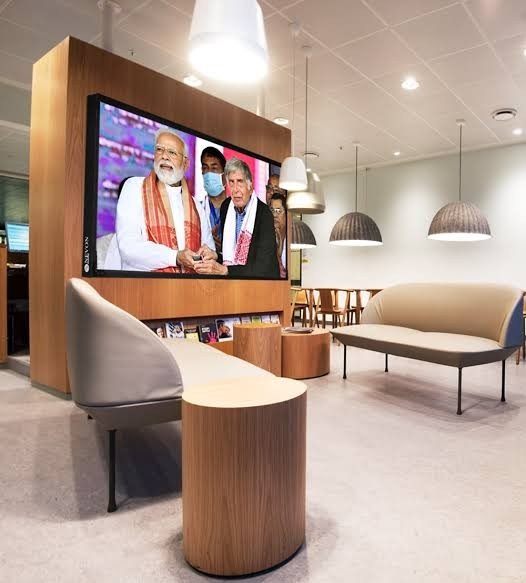
A large digital display can completely change the way people experience a space.
Walk into a corporate lobby and a large visual wall can immediately communicate the company’s brand. Enter a retail showroom and a large digital canvas can showcase products and campaigns. At a conference, an LED video wall can become the visual centre of the stage. At an event, it can provide a backdrop for presentations, entertainment and live content.
But choosing an LED video wall is not simply a matter of selecting the biggest screen available.
The right solution depends on the environment, viewing distance, content, screen size, installation method and how the display will be used.
This is particularly important because LED video walls are modular systems. They can be designed for different dimensions and applications, which means the planning stage has a major influence on the final result.
What Is an LED Video Wall?
An LED video wall is a large-format digital display created by combining LED modules or cabinets to form a large visual surface.
Unlike a traditional television or projector, a direct-view LED video wall produces the image directly through its LED pixels.
One of its most noticeable characteristics is the absence of the large visible bezels found between conventional tiled LCD panels.
This allows the display to appear as one continuous visual surface.
LED video walls can be used for:
- Corporate presentations
- Retail displays
- Shopping malls
- Events and exhibitions
- Stage backdrops
- Product launches
- Hospitality environments
- Digital advertising
- Public spaces
- Large-format visual communication
Sunshine Display System describes its LED video wall solution as a large-format LED display available for both fixed installation and rental applications. Its published product information also lists highly customised configurations using LED modules ranging from P2 to P16.
The First Decision: What Is the LED Video Wall Supposed to Do?
Before discussing pixel pitch, brightness or screen dimensions, define the purpose of the display.
This sounds obvious, but it is one of the most important decisions in an LED video wall project.
A corporate meeting room may require a completely different display from an outdoor event.
A retail store may prioritise close viewing and detailed product visuals.
A concert stage may prioritise large-scale visibility from a much greater distance.
A hotel lobby may need an elegant, high-resolution visual surface that complements the interior.
Therefore, start with the question:
What will people be watching on the LED video wall, and from where?
Once that is clear, the technical specifications become easier to determine.
LED Video Wall for Corporate Offices
Corporate environments are increasingly using large-format displays for communication, presentations and brand experiences.
An LED video wall can be used in:
- Reception areas
- Corporate lobbies
- Boardrooms
- Meeting rooms
- Conference rooms
- Experience centres
- Training spaces
- Corporate events
In a lobby, for example, the display may show company branding, videos, presentations or visual content.
In a conference room, the priority may instead be readability and image detail.
This means the same term— “LED video wall”—can describe systems with very different specifications.
For corporate installations, the display should be selected based on the typical viewing distance rather than simply choosing a popular pixel pitch.
LED Video Wall for Retail Stores and Shopping Malls
Retail environments depend heavily on visual communication.
A large LED video wall can provide a prominent digital surface for:
- Product campaigns
- Brand videos
- Seasonal promotions
- New product launches
- Store branding
- Lifestyle visuals
- Promotional content
The advantage is that the content can change without changing the physical display.
A retail business may use the same screen for a festival campaign one month and a product launch the next.
This makes the LED video wall a reusable communication platform rather than a display dedicated to one campaign.
However, retail customers may stand relatively close to the screen.
That makes pixel pitch especially important.
Why Viewing Distance Matters
One of the most frequently misunderstood LED video wall specifications is pixel pitch.
Pixel pitch is the distance between adjacent LED pixels, normally measured in millimetres.
For example:
- P2
- P2.5
- P3
- P4
- P5
- P8
- P10
- P16
A smaller pixel pitch means the pixels are positioned closer together.
This can support a finer image when viewers are relatively close to the screen.
A larger pixel pitch can be suitable for audiences farther away.
There is no universal “best” pixel pitch.
The correct choice depends on the viewing environment.
Industry guidance also emphasises the relationship between pixel pitch, image quality and viewing distance when designing an LED video wall.
Sunshine Display System lists highly customised LED video wall configurations from P2MM to P16MM, giving projects flexibility across different viewing requirements.
LED Video Wall for Events and Stage Backdrops
Events are one of the most visible applications for LED video walls.
They can be used for:
- Conferences
- Product launches
- Exhibitions
- Weddings
- Concerts
- Award ceremonies
- Corporate events
- Cultural programmes
- Live shows
For an event, the LED wall can become part of the stage design rather than simply functioning as a screen.
It can display:
- Speaker presentations
- Logos
- Event graphics
- Videos
- Live camera feeds
- Sponsor messages
- Animated backgrounds
Sunshine Display System specifically promotes LED video wall screens for events and offers both fixed-installation and rental options.
Rental can be particularly useful for businesses or event organisers that need a large-format display temporarily rather than as a permanent installation.
Fixed Installation vs. LED Video Wall Rental
Not every project requires a permanent LED video wall.
This is an important distinction when planning a display.
Fixed LED Video Wall
A fixed installation can make sense when the display will remain in one location for an extended period.
Examples include:
- Corporate offices
- Retail stores
- Shopping malls
- Hotels
- Experience centres
- Permanent event venues
The installation can be designed around the architecture and long-term requirements of the space.
Rental LED Video Wall
Rental can be more practical for temporary requirements.
Examples include:
- Conferences
- Product launches
- Weddings
- Exhibitions
- Concerts
- Roadshows
- Temporary brand activations
The display can be installed for the event and removed afterwards.
Sunshine Display System states that its LED video wall screens are available for both fixed installation and rental applications in India.
LED Video Wall for Hotels and Hospitality
Hotels need displays that fit into the environment rather than overpowering it.
An LED video wall can be used in:
- Hotel lobbies
- Event halls
- Conference spaces
- Banquet areas
- Restaurants
- Reception areas
For example, a hotel could use a display to communicate event information during a conference and later use the same screen for promotional or branding content.
The flexibility of digital content makes the display useful across different activities.
For hospitality environments, visual quality is only one consideration.
The physical design, installation, viewing distance, and relationship between the screen and interior architecture should also be considered.
LED Video Wall for Exhibition and Experience Centres
Exhibitions are designed to capture attention quickly.
A large LED display can help create a visual focal point at a booth or experience centre.
Instead of covering a wall with printed graphics, brands can use digital content to create a changing environment.
For example, an exhibition display could show:
- Brand introduction
- Product demonstration
- Product features
- Customer applications
- Video presentation
- Company information
The same physical screen can support the entire presentation.
This is especially useful when a company participates in multiple events and wants to reuse its display system.
Outdoor LED Video Walls Require Different Planning
An outdoor LED video wall has to deal with environmental conditions that an indoor display does not.
Depending on the location, the system may be exposed to:
- Rain
- Dust
- Sunlight
- Wind
- Temperature variations
- Humidity
This is why an outdoor project should not simply use an indoor LED specification.
Brightness also becomes important.
A screen designed for a controlled indoor environment may not provide sufficient visibility when exposed to strong daylight.
Sunshine Display System lists multiple ingress-protection options for its LED video wall solutions, including configurations ranging from IP20 through IP69, depending on the product and application.
The exact protection level should be selected according to the actual installation environment rather than assuming that the highest rating is automatically necessary.
Indoor LED Video Walls Need a Different Specification
Indoor installations normally operate under more controlled conditions.
That does not mean every indoor display should have the same specification.
A meeting room, retail store, lobby and auditorium can have completely different viewing requirements.
For example:
Meeting room
People may sit relatively close to the screen, so fine pixel pitch can be important.
Lobby
People may view the screen from different distances and angles.
Auditorium
The audience may be much farther away.
Retail store
Customers can move close to the display, making image detail more important.
The best specification is therefore determined by the actual environment.
Brightness Should Match the Environment
Brightness is another specification that should be selected according to where the LED video wall will operate.
An excessively bright display can be uncomfortable in a dark indoor room.
A display with insufficient brightness may struggle in a bright environment.
Therefore, the right question is not:
“What is the highest brightness available?”
It is:
“What brightness is appropriate for this installation?”
Consider:
- Indoor or outdoor location
- Direct sunlight
- Artificial lighting
- Stage lighting
- Time of day
- Viewing distance
- Content type
A professional supplier should assess these factors before recommending a final configuration.
Content Should Be Designed for the LED Wall
An LED video wall is only as effective as the content displayed on it.
A common mistake is creating content first and thinking about the screen dimensions later.
Instead, content should be developed around the final display format.
Consider:
- Screen aspect ratio
- Pixel resolution
- Viewing distance
- Text size
- Brand colours
- Video quality
- Motion
- Contrast
A wide LED wall, for example, may require content that is designed specifically for that aspect ratio.
Simply stretching a standard video can make important visual elements appear poorly positioned.
Why a Seamless Surface Matters
One of the biggest visual advantages of a direct-view LED video wall is the continuous appearance of the display.
Traditional tiled LCD video walls have a bezel between individual panels.
Those lines can interrupt content when a large image or video crosses multiple panels.
Direct-view LED systems are modular without the same panel-bezel structure.
That makes them particularly attractive for:
- Large brand visuals
- Stage backdrops
- Product videos
- Immersive environments
- Architectural displays
- High-impact advertising
Current industry comparisons consistently identify the seamless appearance as one of the key distinctions between direct-view LED and tiled LCD video walls.
Maintenance Should Be Part of the Planning Process
A large LED video wall is a technical system.
Before installation, businesses should understand how the display will be serviced.
Ask the supplier:
- How are LED modules replaced?
- How are power components accessed?
- Is front maintenance available?
- Are spare modules available?
- What technical support is provided?
- What warranty applies?
- Who handles installation and commissioning?
These questions are important because maintenance requirements can affect the practical cost and availability of the display over its operating life.
Do not evaluate an LED video wall solely by its purchase price.
Evaluate the complete system.
How to Plan the Screen Size
Bigger is not always better.
The screen should be large enough for the audience to comfortably see the content, but it should also fit the physical space.
Start with:
Available wall or stage area
Then consider:
Viewing distance
Then:
Content type
Finally:
Desired visual impact
For a conference room, a smaller fine-pitch display may be more appropriate than a huge screen.
For a concert stage, the requirements can be completely different.
The physical dimensions should therefore be determined as part of the project design rather than selected independently.
LED Video Wall for Branding vs. Information
Another useful distinction is whether the wall is primarily being used for branding or information.
Branding-focused installation
The content may include:
- Logos
- Brand videos
- Product imagery
- Campaign visuals
- Motion graphics
The visual impact is often the priority.
Information-focused installation
The display may show:
- Presentations
- Schedules
- Announcements
- Data
- Directions
- Event information
Readability becomes more important.
Some projects require both.
In that case, the LED video wall needs to balance visual impact with practical readability.
A Simple LED Video Wall Planning Checklist
Before requesting a quotation, prepare these details:
- Location
Indoor, outdoor or temporary event installation?
- Purpose
Branding, advertising, presentation, entertainment or information?
- Viewing distance
How close will the audience normally be?
- Screen dimensions
What physical area is available?
- Content
Text, images, video, live feeds or a combination?
- Installation type
Permanent or rental?
- Lighting
How bright is the environment?
- Environmental conditions
Will the screen be exposed to rain, dust or direct sunlight?
- Maintenance
How will the system be serviced?
- Control requirements
How will content be supplied to the screen?
Having these details ready can make the specification and quotation process considerably more precise.
Common LED Video Wall Buying Mistakes
Mistake 1: Choosing the smallest pixel pitch automatically
A smaller pitch is not automatically the right choice.
It should be matched to viewing distance and content requirements.
Mistake 2: Choosing based only on price
A quotation should be evaluated by its complete specification.
Mistake 3: Using indoor equipment outdoors
Outdoor installations require appropriate environmental protection and brightness.
Mistake 4: Ignoring content design
The screen and content need to be designed as one visual system.
Mistake 5: Forgetting maintenance
Ask about module access, spare parts and technical support before installation.
Mistake 6: Making the screen unnecessarily large
The correct size depends on the audience, environment and content.
Why Customisation Matters in LED Video Wall Projects
One of the advantages of modular LED technology is that the display can be designed around the application.
A corporate lobby may need one configuration.
An event stage may need another.
A retail wall may require a different pixel pitch.
An outdoor advertising installation may need different brightness and environmental protection.
Sunshine Display System’s published LED video wall information highlights customisation and LED module options ranging from P2MM to P16MM, along with variants such as curtain LED, LED mesh and glass LED screens.
This makes it important to discuss the complete project with the manufacturer rather than asking for a generic “LED video wall.”
LED Video Wall: Think Beyond the Screen
The screen itself is only one component of a successful LED video wall project.
A good installation combines:
- The right display technology
- The right pixel pitch
- The right brightness
- The right screen dimensions
- The right installation method
- The right content
- Appropriate maintenance support
When these elements work together, the result is more than a large screen.
It becomes a visual communication system designed around a particular space and audience.
Final Thoughts
An LED video wall can serve very different purposes, from corporate communication and retail branding to event production and large-format advertising.
But the right solution is not determined by screen size alone.
Businesses should first define where the display will be used, who will view it, how far away they will be, what type of content will be shown and whether the installation is permanent or temporary.
From there, pixel pitch, brightness, screen dimensions, environmental protection and maintenance requirements can be selected more intelligently.
Sunshine Display System offers LED video wall solutions for fixed and rental applications and lists custom configurations using LED modules from P2 to P16, allowing the display to be specified around different project requirements.
The best LED video wall is therefore not simply the largest or most expensive display.
It is the display that has been designed around the space, audience and purpose.